If you have a restaurant in Mexico, you know the day-to-day can feel like a whirlwind. Between taking orders, managing tables, controlling inventory and making sure everything goes out on time, you need tools that really help you organize your operation. A good point of sale for restaurants in Mexico is not a luxury. It is a need if you want your business to run without unnecessary friction.
The question “which is the best point of sale for restaurants in Mexico?” does not have one answer, because what works for a small taquería is not the same as what works for a fine dining restaurant. The key is finding a system that adapts to the way you work, not the other way around. We want you to stop depending on Excel for critical tasks and reduce manual follow-up for your sales and products.
A well-chosen PDV lets you connect sales, customers and reports efficiently. That means you can know which dishes sell the most, which ingredients need restocking and how your staff is performing, all from one place. This helps you make better-informed decisions and focus on what really matters: your customers and the quality of your food.
At Walabi, we understand that every SMB is different. That is why we will guide you through the essential features and types of PDV available, so you can know which process makes sense to automate first and how to design software around your real operation.
What Is Going On With the Point of Sale (PDV) in Your Restaurant?
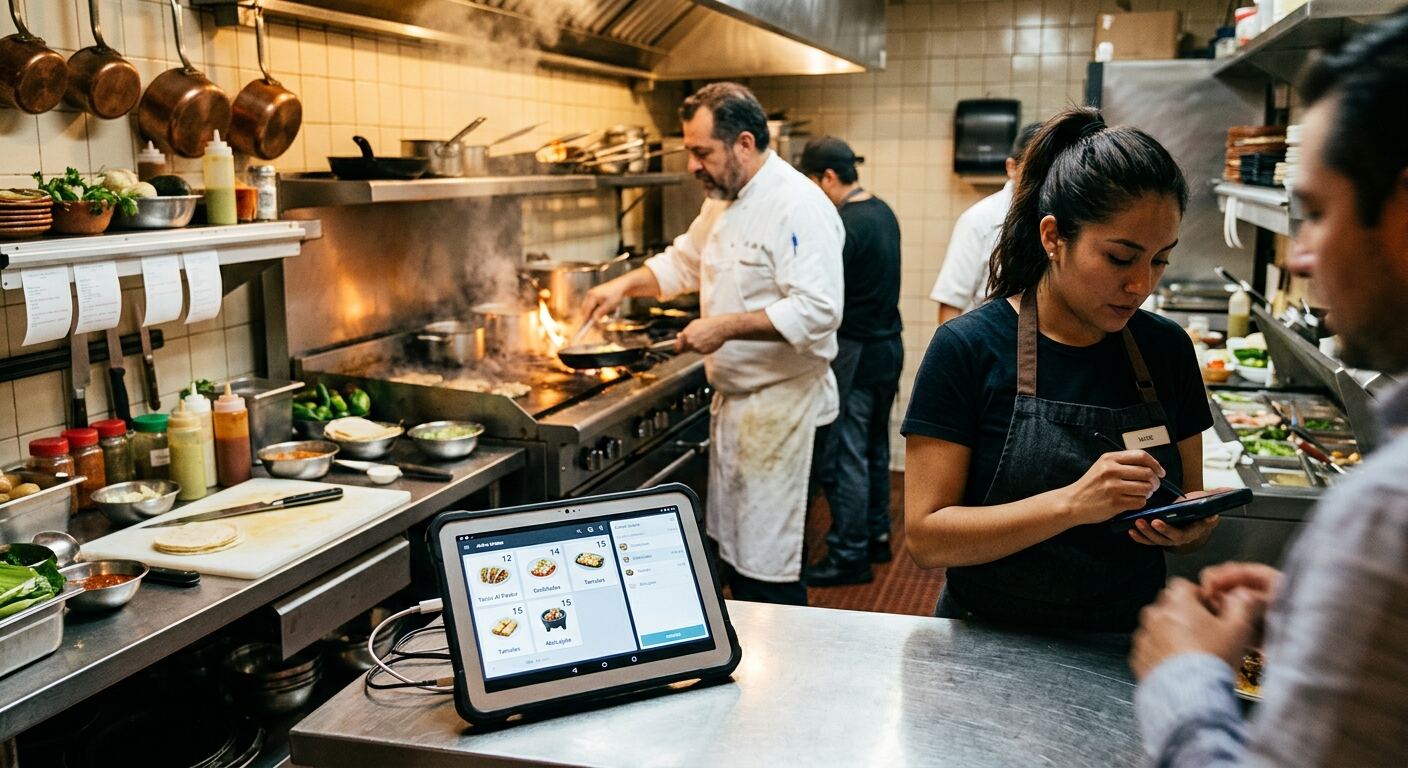
The point of sale, or PDV, is much more than a cash register. It is the brain of your restaurant, the place where all important operations connect. From the moment a customer asks for a table until they pay the bill, the PDV manages each step. Imagine that in your fonda, a server takes an order on a tablet, it goes straight to the kitchen, the system subtracts ingredients from inventory and, at the end, creates the bill and invoice. All of that is the PDV.
A good system helps you stop depending on Excel to control daily sales or track your tables. It lets you reduce manual follow-up for each order ticket and gives you a clear view of how your business moves. For example, if you have a busy restaurant in Condesa, a PDV helps you assign tables efficiently, track wait times and make sure no order gets lost in the rush.
Features a PDV for Mexican Restaurants Should Have
To choose the right point of sale for a restaurant in Mexico, some features cannot be missing. Think about how your team works every day and which tools would make their lives easier. Here is the essential list:
Fast, Intuitive Interface
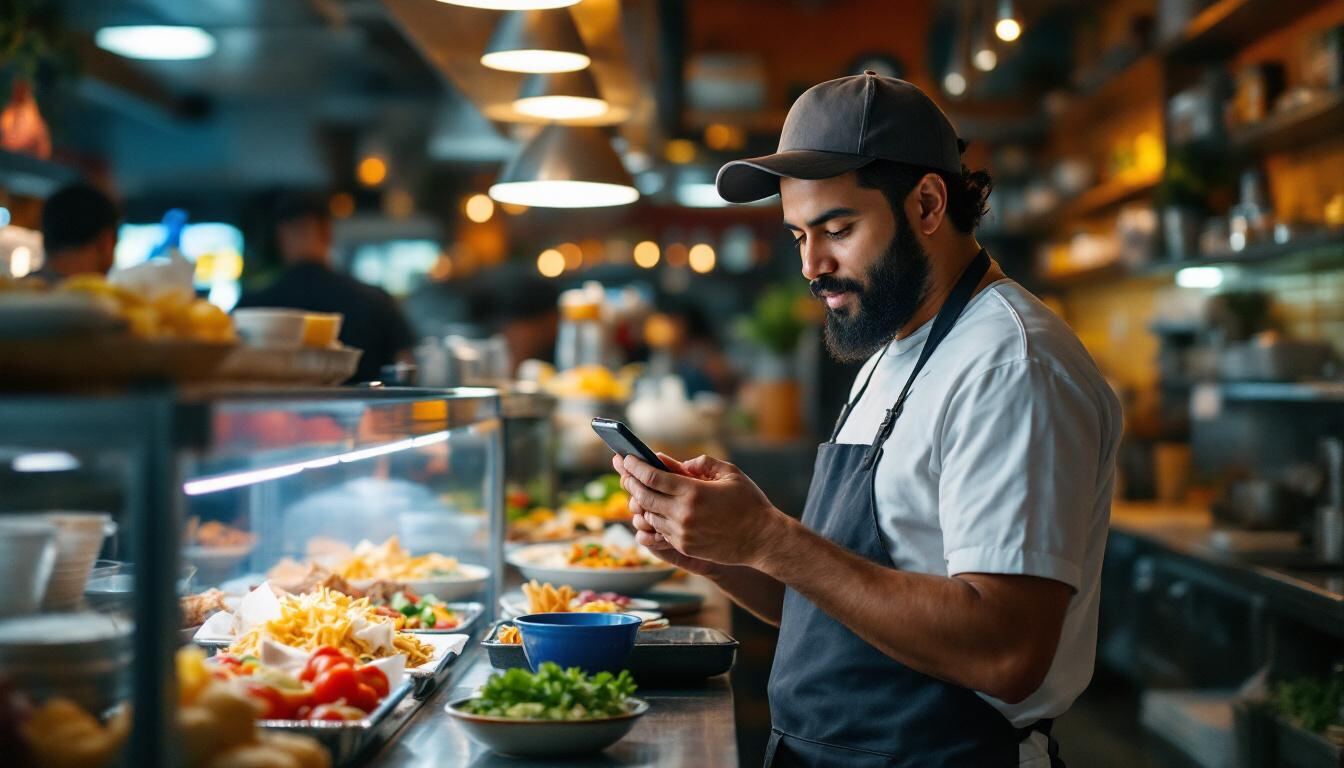
In a restaurant, every second counts. Your staff needs a system they can use without complications, even during peak hours. An intuitive interface means large buttons, clear menus and a logical flow for taking orders, changing dishes or splitting checks. For example, if a customer in your cafe orders a coffee with almond milk and extra caramel, the server should be able to select those options quickly without searching through complex submenus. This reduces errors and speeds up service.
Table and Order Ticket Management
This is one of the most critical features. A good PDV lets you see the status of your tables in real time: which are occupied, which are clean and which are waiting. It should also make it easy to send order tickets to different kitchen areas (cold, hot, bar) and allow order changes or cancellations simply. Imagine that in your taquería, a large group arrives and needs to join two tables. The system should let you make that change visually and assign orders to the right table without confusion.
Real-Time Inventory Control
Knowing exactly what you have in storage is essential to avoid waste and make sure you never run out of key ingredients. A PDV with inventory control automatically subtracts ingredients every time a dish is sold. For example, if you sell a torta ahogada, the system should subtract bread, meat, salsa and onion from inventory. This helps you know when to place an order with suppliers and identify which dishes are most profitable. You can even set alerts for when an ingredient is about to run out.
Payment and Invoicing Integration
Making payment easy is crucial for the customer experience. Your PDV should integrate with different payment methods, whether cash, credit or debit card, or even QR code payments. Also, the ability to generate electronic invoices (CFDI) automatically and simply is a must in Mexico. Think about your seafood restaurant. At the end of the meal, the customer pays by card and the system automatically creates the invoice with all tax details, without your staff having to do a manual process that can lead to errors.
Sales and Performance Reports
To make smart decisions, you need clear data. A good PDV gives you detailed reports on your sales by hour, day, dish, server and more. It also lets you see which dishes are most popular or which have the highest profit margin. This helps you know which process makes sense to automate first or what changes to make to your menu. For example, if the reports show that your Thursday special has low sales, you can decide to change it or promote it differently.
Types of PDV: Which One Is Right for You?
When we talk about points of sale for restaurants, there are different approaches. The choice will depend on your specific needs, budget and how you prefer to manage your information. There is no single answer, only the one that best fits your operation.
Cloud PDV vs. Local
Cloud PDVs store your information on remote servers, accessible from anywhere with internet. This means you can review your sales from home or from your phone. They are ideal for restaurants with several locations or for those who want to avoid the upfront investment in servers. One example would be a PDV you use in your food truck, where connectivity matters and you cannot have a physical server. Local PDVs, on the other hand, install the software directly on your computers and servers. They offer more control over your data and do not depend on internet, but they require more maintenance and a larger upfront hardware investment. They are a good option if your restaurant is in an area with unstable connectivity and you prefer to keep everything under your own roof.
Compatible Hardware (Tablets, Printers, Etc.)
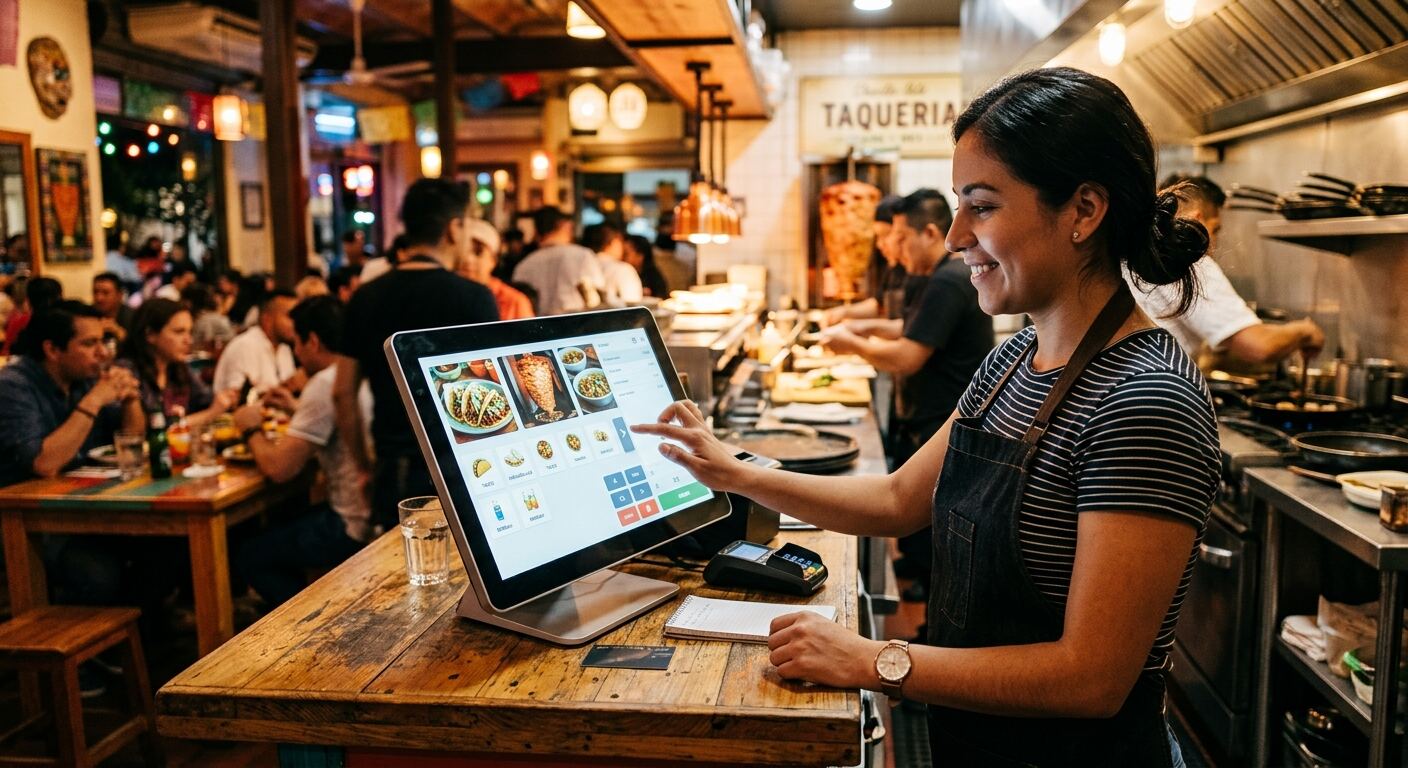
Software is only one part. You also need the right hardware. This includes tablets or touch terminals for taking orders, thermal printers for kitchen tickets and receipts, cash drawers, barcode readers and bank terminals. Make sure the PDV you choose is compatible with the hardware you already have or plan to buy. For example, if you already invested in several tablets for your servers, the PDV should work well on them so you do not have to buy new equipment.
How to Choose the Best PDV for Your Business in Mexico
Choosing a point of sale for a restaurant in Mexico is an important decision that will affect your daily operation. Do not rush. Take time to evaluate your options and think long term. Remember that the goal is to design software around your real operation, not the other way around.
Consider Your Needs and Budget
Before looking, make a list of what your restaurant really needs. Do you need to manage tables? Control detailed inventory? Electronic invoicing? Handle tips? Then set a realistic budget, both for the initial investment and for monthly fees or licenses. Do not get pulled in by features you will not use. For example, if your restaurant is small and has only five tables, you may not need a complex reservation management system, but you do need one that helps you control ingredients for your daily dishes.
Local Technical Support: Key
In Mexico, having local technical support is fundamental. If your system fails during lunch rush, you need someone to help you quickly and in your language. Make sure the provider offers good customer service, with clear communication channels (phone, chat, email) and reasonable response times. Ask whether they offer training for your staff and whether support is available during hours that fit your operation, including weekends. You do not want your kitchen to stop because of a technical problem with no immediate answer.
Opinions From Other Restaurant Owners
One of the best ways to know whether a PDV works is to ask people who already use it. Look for reviews, testimonials or references from other restaurant owners in Mexico. They can give you a real view of ease of use, support quality and whether the system truly does what it promises. If you know someone with a business similar to yours, ask which PDV they use and why they chose it. Their experience will help you avoid common mistakes and make a more informed decision.